DaYuLing oolong review: rich texture, subtle flavor and divided expectations
DaYuLing is a sample to consider when buttery texture, green-savory detail and a lingering floral finish matter more than sheer strength. Its reputation and grade do not remove the tradeoff: some drinkers find it special, while others find the added interest or endurance insufficient.
We may earn a commission if you buy through our links. Affiliate disclosure.
At a Glance
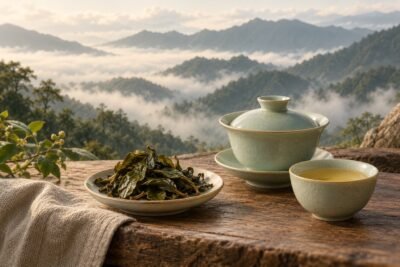
KEY FEATURES
- DaYuLing high-mountain oolong
- Qingxin / Chin Shin
- Cup: 5 g / 355 mL / 100°C (212°F) / 3–5 min
Tea assessment
Research-based editorial fit scores, not personal testing or measured intensity. Historical customer experiences may differ from the current batch.
Layered green-floral interest supports an attentive session.
Rich, buttery texture is a strong positive theme.
The opening timing and batch-label conflict need attention.
Positive endurance reports coexist with a rapid-fading account.
PROS
- Texture can make a delicate cup feel substantial.
- Green-savory and floral detail can reward attention.
CONS
- Sweetness or green notes may be unwelcome.
- The later cups may not sustain the opening.
- The extra purchase benefit is a personal question.
What would count as an upgrade for you?
DaYuLing’s premium positioning only becomes useful once you define what you want beyond another Taiwanese oolong. The strongest positive descriptions concern viscous or buttery texture and green-savory detail with gentle flowers. They do not establish that every buyer will receive a louder aroma, a sweeter cup they prefer, or a longer session.
| Possible reason to choose DaYuLing | What prevents a blanket recommendation |
|---|---|
| A delicate cup with substantial texture | Some drinkers enjoy the body but dislike its sweetness or grassy-umami character. |
| Complexity that continues after the opening | Critical gongfu feedback describes an interesting first infusion followed by astringency and rapid fading. |
| A special-occasion alternative to familiar Taiwanese tea | Historical value judgments disagree, and no comparable current-price calculation establishes an upgrade. |
Test the opening and the following cups separately
The contrary endurance account matters because an impressive first infusion can dominate a purchase decision. Positive reports of repeated enjoyable cups also exist. The merchant’s response defending endurance is a seller claim, not an independent refutation of the dissatisfied session. An editorial sample test should keep both possibilities open.
Cup
5 g / 355 mL / 100°C (212°F) / 3–5 min. Decant at the chosen time. The cup instructions do not specify a rinse.
Gongfu
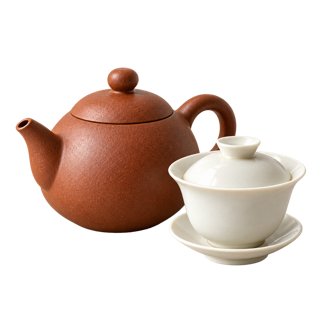
7 g / 110 mL / 100°C (212°F). Approximately 5 seconds. Infusion sequence: 15, 20, 25, 35, 50, 70, 90, 120 seconds. Drain fully between pours.
DaYuLing’s supplied gongfu method starts at fifteen seconds, shorter than the reviewed Li Shan’s opening. Use the correct schedule, then note whether texture and green-floral interest persist through the first three pours. A fading cup is not improved merely by recording a higher infusion count.
Resolve the batch question before buying for provenance
The listing displays an Autumn Tea label beside a May harvest date and names both the Dayuling area and Fushoushan Farm. Confirm the supplied batch if season or provenance drives your purchase. This review leaves those details as stated rather than resolving them by inference.
For a preference-led choice, the Taiwanese sample shortlist offers Ali Shan and Li Shan as relevant comparisons. A result in which you prefer one of those is useful evidence for your next order; it does not mean you failed to appreciate a premium tea.
Pros & Cons Analysis
Based on supplied customer reviews and verified product documentation
Pros
- Buttery, creamy and viscous impressions explain why some drinkers value the tea without calling it forceful. The attraction is the way the cup feels as well as its aroma.
- A detailed account describes an interplay of umami, mineral and gentle floral notes. This gives a reason to sample it if those associations appeal, without implying nutritional mineral content.
Cons
- One account finds it too sweet; another objects to the grassy-umami side. A premium grade does not make those preference differences disappear.
- A critical gongfu account enjoys the first infusion’s complexity but finds astringency and rapid fading afterward. This contradicts the expectation of reliably long endurance.
- A reader finds little added interest over cheaper choices, while others reserve it for a special occasion. Without comparable current offers or your own preference result, the premium positioning is not a value conclusion.
Our verdict
Try DaYuLing as a small comparison sample when texture and green-floral detail already appeal to you. Do not make it a large first purchase solely because it is award-winning. Li Shan or Ali Shan may satisfy the same drinking routine without your needing to prefer this particular profile.
Frequently Asked Questions
Does Cha Wang guarantee the best cup?
No. It is part of the merchant’s product naming and positioning, not a controlled comparison of every tea.
Will it always last eight infusions?
No. The seller supplies an eight-infusion schedule, while original accounts disagree about how long the enjoyable flavor persists.
Tea details
| Tea style | DaYuLing high-mountain oolong |
|---|---|
| Seller-stated origin | Dayuling Area, Taichung, Taiwan; garden listed as Fushoushan Farm |
| Cultivar | Qingxin / Chin Shin |
| Listed harvest | May 18, 2026; season label says Autumn |
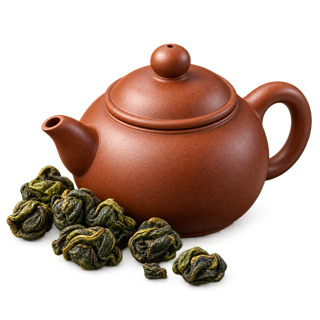
| Leaf form | Rolled balls |
| Added flavoring | Not independently verified; aroma names are not ingredient declarations |
| Cup leaf weight | 5 g |
| Cup water volume | 355 mL |
| Water temperature | 100°C / 212°F |
| Cup infusion time | 3–5 min |
| Gongfu leaf weight | 7 g |
| Gongfu water volume | 110 mL |
| Gongfu rinse | Approximately 5 seconds |
| Gongfu infusion sequence | 15, 20, 25, 35, 50, 70, 90, 120 seconds |
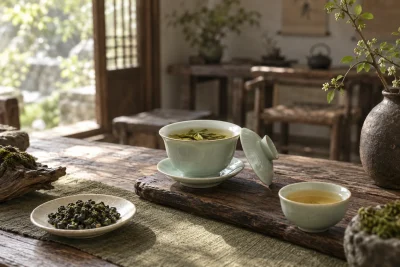
Taiwan Jin Xuan Milk Oolong Tea — Unflavored
Ali Shan, Chiayi County, Taiwan · 2026-05-02
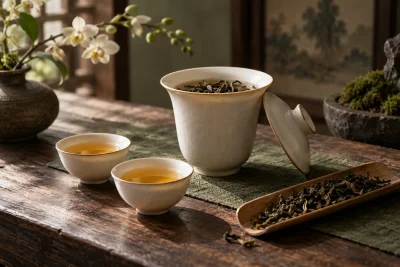
Lao Cong Mi Lan Xiang Phoenix Dan Cong Oolong Tea
Fenghuang Town, Chaozhou, Guangdong, China · 2026-05-20
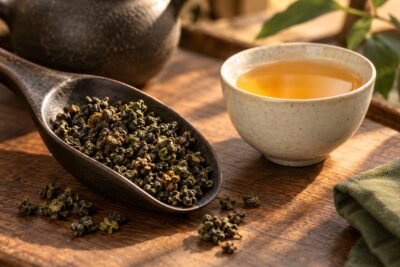
Superfine Taiwan Moderately-Roasted Dong Ding Oolong Tea
Dongding, Lugu Township, Nantou, Taiwan · May 18, 2026
Tie Guan Yin Iron Goddess Oolong Tea
Anxi County, Quanzhou, Fujian, China · 2026-05-18; season label conflicts