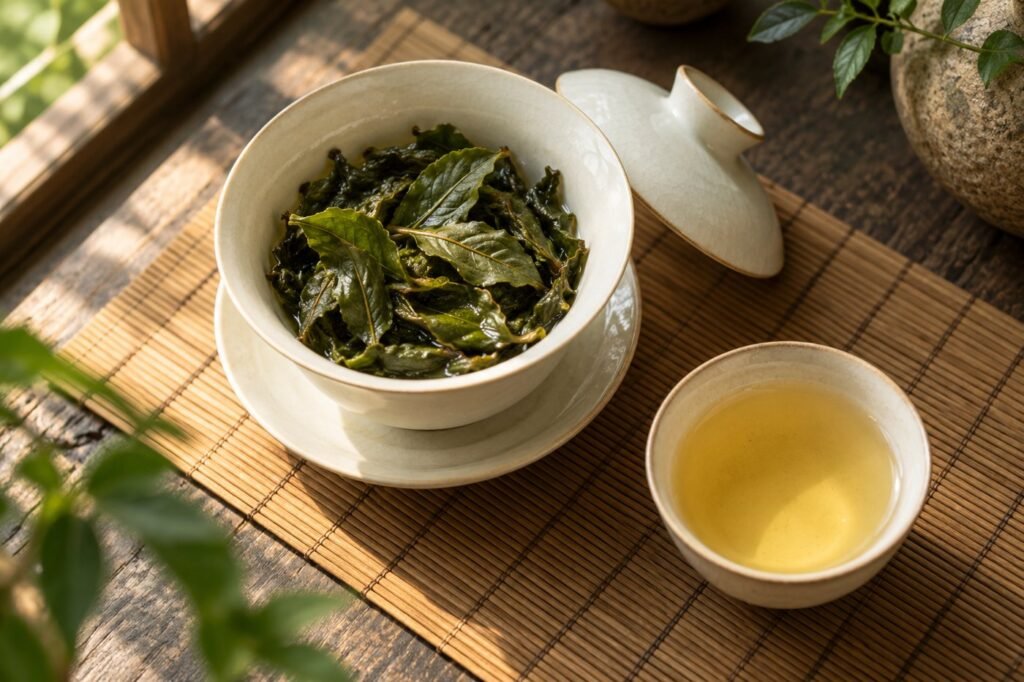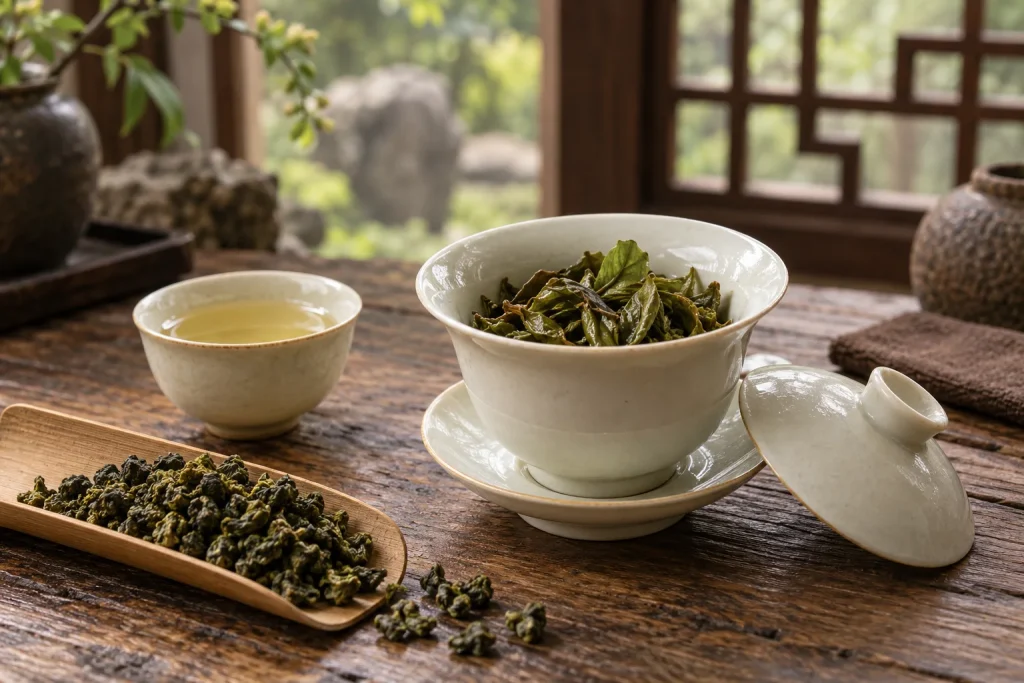
Roasted Dong Ding is a different comparison
The Dong Ding here is the standard Qingxin listing, not the separately sold moderately roasted version. Tie Guan Yin is the standard award-winning listing, not Nonpareil or Monkey Picked. Their rolled appearance does not make them interchangeable.
| Decision detail | Taiwan Dong Ding (Tung Ting) Oolong Tea | Tie Guan Yin Iron Goddess Oolong Tea |
|---|---|---|
| Seller-stated origin | Dongding, Lugu Township, Nantou, Taiwan | Anxi County, Quanzhou, Fujian, China |
| Cultivar | Qingxin / Chin Shin | Tieguanyin |
| Listed harvest | May 18, 2026 | May 18, 2026; season label says Autumn |
| Cup starting point | 5 g / 355 mL / 100°C (212°F) / 3–5 min | 5 g / 355 mL / 100°C (212°F) / 3–5 min |
| Gongfu starting point | 7 g / 110 mL / 100°C (212°F) | 7 g / 110 mL / 100°C (212°F) |
The choice is within a green direction
Dong Ding’s original feedback repeatedly places vegetables ahead of flowers, sometimes while praising body and aftertaste. Tie Guan Yin’s sample includes vivid floral fragrance, fresh vegetable impressions and a smooth cup, alongside complaints about excessive vegetal character, sourness and less floral batches. A reader who dislikes leafy oolong may dislike both.
The same seven-gram gaiwan dose does not mean the timing is identical. Follow each sequence and leave room for the leaves to open. The Dong Ding brewing guide also separates the standard and roasted listings.
Compare one practical cup before a long session
The cup doses and time ranges match. Use that simple starting point if your normal routine is a mug and infuser. Choose the same time within the range, decant fully, and ask which finish you actually want to return to. Do not reward a tea merely because its leaves can be brewed again after you stop enjoying it.