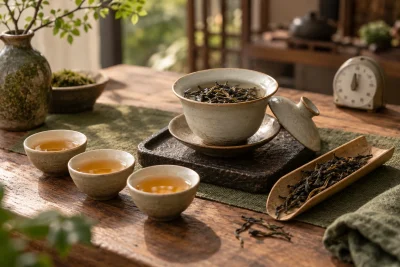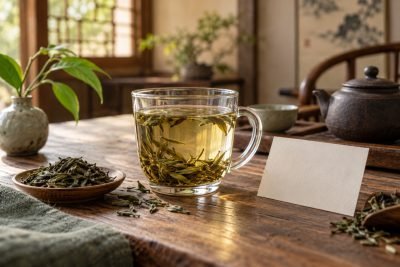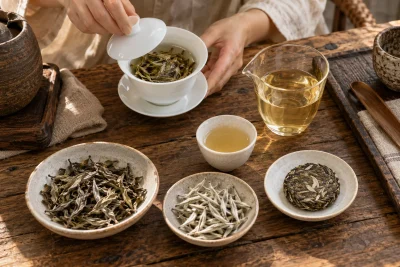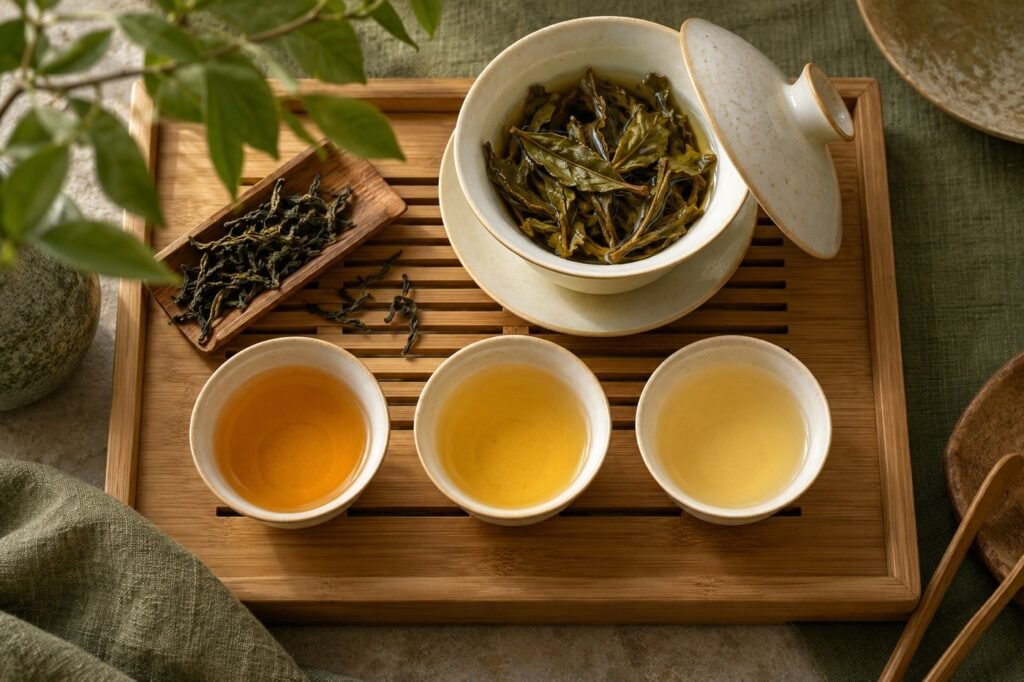
Finish a tea session when the next cup no longer offers the flavor, texture or finish you enjoy. A printed sequence is a starting method, not a required number of successful infusions or a reliable way to rank value.
Three different ways a session can end
The cup becomes thin but still pleasant
One more measured infusion may be worthwhile if a gentle finish is what you enjoy. Pale color alone does not decide the result.
The preferred notes disappear
Stop when the fruit, flowers or texture you chose the tea for have gone, even if the leaves still produce color.
Dryness or bitterness takes over
Do not keep extending time just to reach a number. A shorter next contact may test overextraction; it need not become an obligation to continue.
The original accounts explain why there is no fixed target
The standard Dong Ding has a seven-pour method, yet some accounts find it one-dimensional or fading after only a few. Song Zhong has favorable reports of long sessions alongside a detailed account of disappointing endurance. Xing Ren Xiang has a twelve-pour schedule, while one detailed session treats its increasingly drying last pours as optional.
These are separate experiences with different harvests and preparations, not measured average yields. They support a stopping decision, not a claim that every tea lasts three, seven or thirteen cups.
Use a short session record
- Record the exact tea, leaf weight, water volume and temperature.
- Start with the listing’s sequence, keeping the rinse separate from drinking infusions.
- After each cup, note what remains enjoyable and what has become less pleasant.
- If the cup is weak but clean, try one modest time increase rather than changing every setting.
- If the next cup adds mainly dryness or dull flavor, stop and record the last pour you enjoyed.
Compare purchases by your routine
A highly concentrated session and a large low-dose mug do not produce comparable infusion counts. Neither do cups of different volume. If value matters, first learn the amount of leaf and total enjoyable tea your own routine uses; then compare current equivalent offers. Do not divide a pack price by the merchant’s maximum printed steep count and call that a reliable cost per cup.
For two teas you want to compare fairly, use the sample comparison routine. The useful result is knowing which preparation you would repeat, not extracting the last possible colored water.