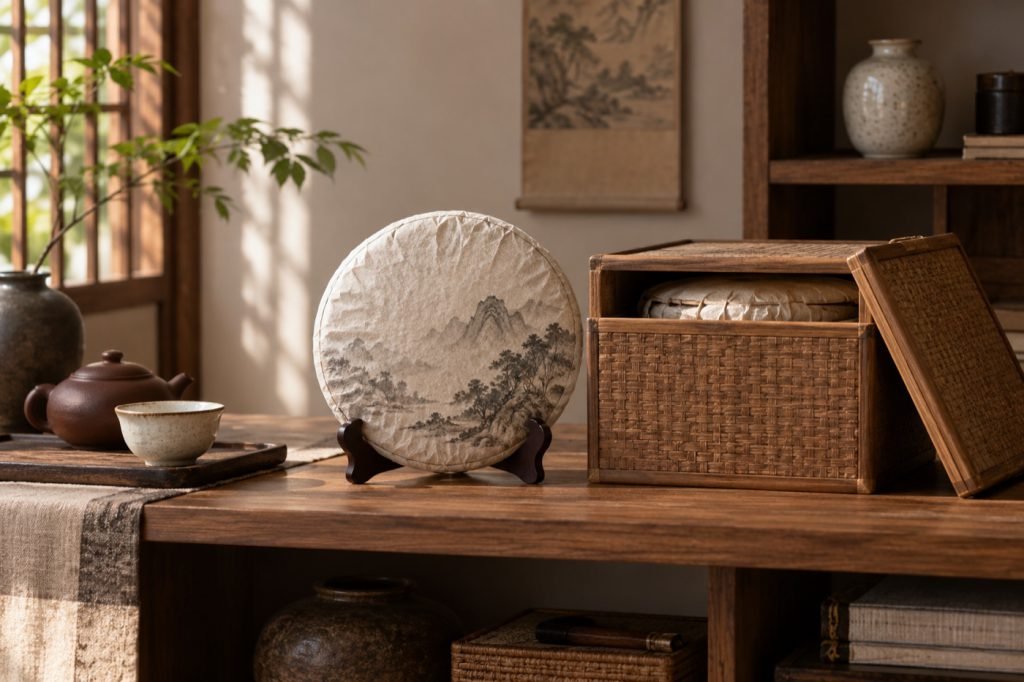
Use a clean, dry place away from direct sunlight and strong household smells. Follow the exact seller’s storage instructions before experimenting with aging conditions.
Separate everyday storage from deliberate aging
The three reviewed ripe and raw listings specify cool, dry storage away from sunlight with ventilation. That does not give a universal humidity target or justify adding moisture to a cupboard. No controlled storage trial was performed for these reviews.
For a loose bag
Keep the tea clearly labeled and protected from spills and kitchen odors. Preserve the package’s identity information so the next refill is not confused with this lot.
For a cake or mini nests
Retain wrapping and batch information. Choose a place where the portions will not be crushed or exposed to damp surfaces; protect them from scented products.
A quick storage check
- Choose a location away from steam, windows and cleaning products.
- Check that the packaging and shelf are dry before putting tea away.
- Record the purchase and supplied batch, particularly when the listing mixes dates.
- Inspect periodically for water damage, pests or unexpected changes; ask the seller about a suspect product rather than trying to brew away a problem.
An earthy flavor is part of the appeal for some ripe-tea drinkers, but taste descriptions cannot certify that a damp or visibly spoiled tea is safe. Do not use a rinse to rescue suspect tea.
Age is not a promise
Historical feedback includes both mellower stored tea and disappointing flavor. Those observations do not establish a predictable improvement curve, resale value or shelf life for your cupboard. Buy a sample you enjoy now and use raw versus ripe to choose a style before thinking about long-term aging.
Sources: reference 1, reference 2, reference 3.