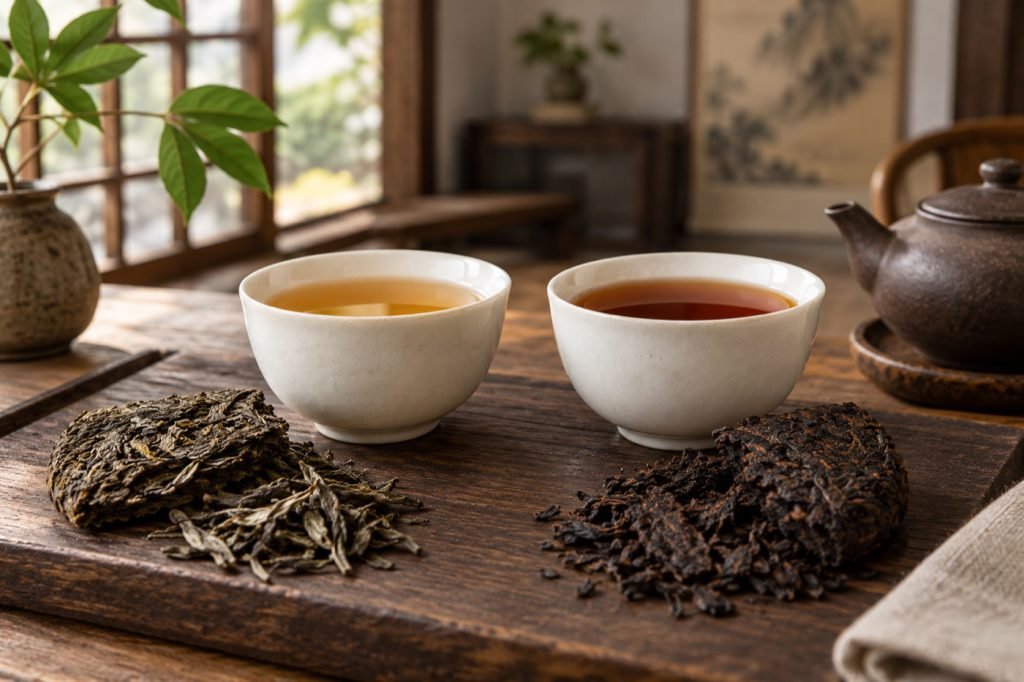
Choose ripe pu-erh when an earthy, woody cup is the attraction. Explore raw pu-erh when you are interested in a brighter session that can include bitterness, fragrance and a sweet finish. Neither name guarantees a gentle first cup.
Processing and shape answer different questions
Raw and ripe describe different processing paths. A cake, a nest-shaped tuocha and loose leaves describe physical formats. A compressed shape does not by itself tell you whether a tea is raw or ripe. Read the listing before choosing your brewing method.
An earthy starting point
The reviewed ripe loose tea and mini tuocha have earthy and woody feedback, alongside objections to damp or fishy notes. These are meaningful taste preferences, not proof that every beginner will like ripe tea.
A more demanding first sample
The Da Xue Shan raw cake has floral and sweet feedback, but also bitterness and astringency. Preparation and personal preference change the result; a raw cake is not simply a lighter version of ripe tea.
Use the recipe for the tea you bought
| Listing | Documented cup starting point |
|---|---|
| Loose ripe 2013 | 5 g / 355 mL / 100°C / 5–8 minutes |
| Mini tuocha | 1 piece / 355 mL / 100°C / 2–5 minutes |
| Da Xue Shan raw | 5 g / 355 mL / 95°C / 3–5 minutes |
These are separate merchant recipes, not a controlled tasting comparison. Start at the shorter stated time, decant fully and adjust one variable. The pu-erh brewing guide includes the concentrated gongfu sequences.
Buy a sample before a storage project
Historical customer reviews cover different purchases and storage histories. The current raw-cake listing itself mixes years, so confirm the supplied batch if age matters. Choose something enjoyable now rather than assuming that age will remove every flavor you dislike. The beginner shortlist helps separate format convenience from taste.
Sources: reference 1, reference 2, reference 3.