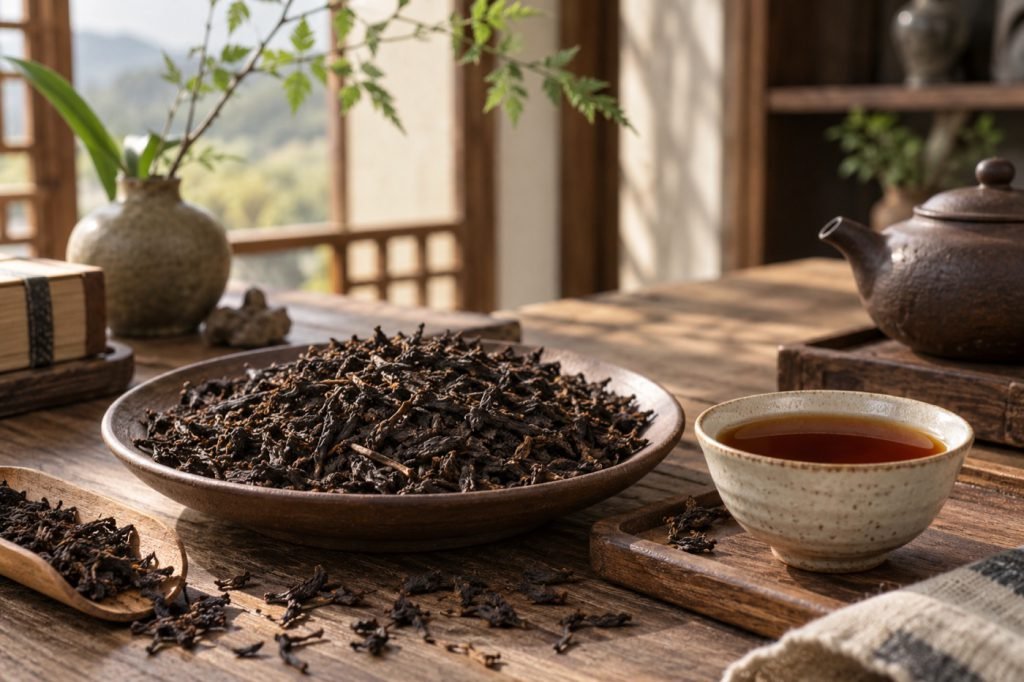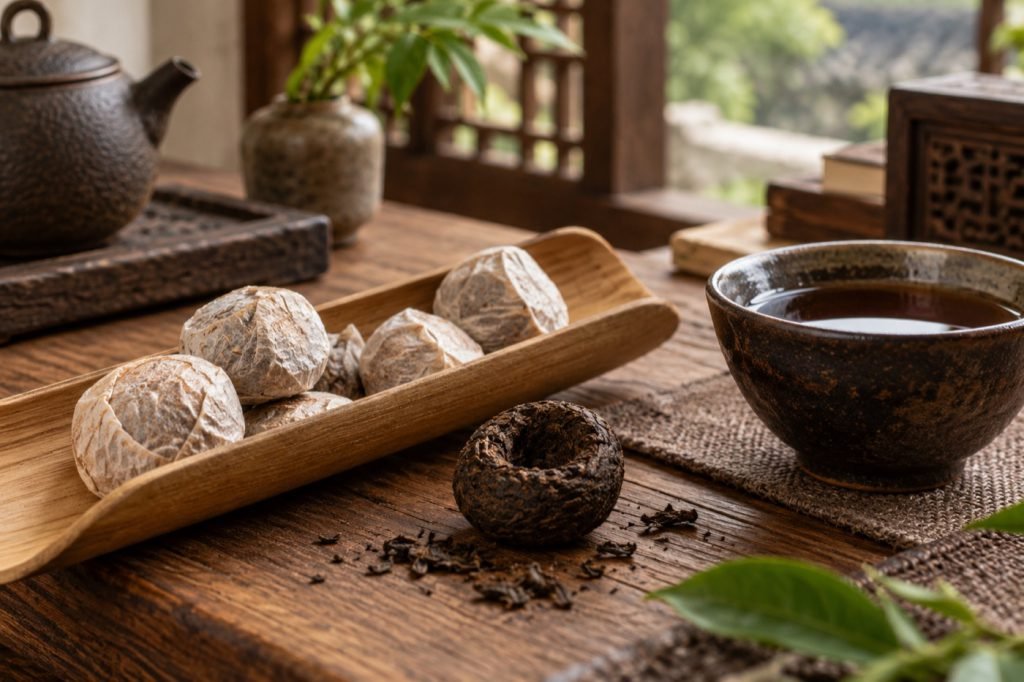
Choose the loose ripe tea when you want to weigh and adjust each portion. Choose mini tuocha when using a ready piece is more valuable. The evidence does not prove that either format is universally smoother, stronger or better value.
The practical differences
| Detail | Loose ripe 2013 | Mini tuocha |
|---|---|---|
| Format | Loose leaf | Individually wrapped nest |
| Cup recipe | 5 g / 355 mL / 100°C / 5–8 min | 1 piece / 355 mL / 100°C / 2–5 min |
| Gongfu dose | 7 g / 110 mL | 1 piece / 110 mL |
| Customer limitation | Damp notes, simplicity or fading | Fine particles, divisive earthy/fishy notes |
| Identity | Seller-stated 2013 range | Summary harvest April 2024 |
The different recipes matter more than assuming compression changes quality in one direction. A piece is not a verified weight, so this table is not a dose-equivalence test. The full brewing guide keeps the infusion schedules separate.
Read the contrary feedback as part of the choice
Loose tea
Rounded sweetness and woody complexity appear in the evidence, but so do damp aftertaste and a simpler cup. The reason to choose it is controllable preparation, not a promise of eliminating ripe-tea earthiness.
Mini tuocha
Ready portions have concrete convenience value. Small-particle and sediment complaints matter if you brew directly from a gaiwan or dislike a textured cup.
For either tea, historical reviews cannot guarantee the current pack’s storage condition. Start with a sample if earthy flavors are unfamiliar; choose raw versus ripe first if the real question is style rather than shape.
Sources: reference 1, reference 2.