A familiar region does not make the recipes equal
| Decision detail | Da Hong Pao Wuyi Rock Oolong Tea | Rou Gui Oolong Tea |
|---|---|---|
| Seller-stated origin | Wuyi Mountain, Nanping, Fujian, China | Zheyang Village, Wuyi Mountain, Nanping, Fujian, China |
| Cultivar | Qi Dan / Dahongpao | Rou Gui |
| Listed harvest | April 30, 2025 | April 30, 2025 |
| Cup starting point | 5 g / 355 mL / 100°C (212°F) / 3–5 min | 5 g / 355 mL / 100°C (212°F) / 5–8 min |
| Gongfu starting point | 8 g / 110 mL / 100°C (212°F) | 9 g / 110 mL / 100°C (212°F) |
Da Hong Pao lists Qi Dan, while Rou Gui lists the Rou Gui cultivar. Their displayed harvest dates match, but that does not make the processing or storage equivalent. The comparison uses separate original customer accounts, not our own side-by-side tasting.
Where the evidence points—and where it refuses a simple split
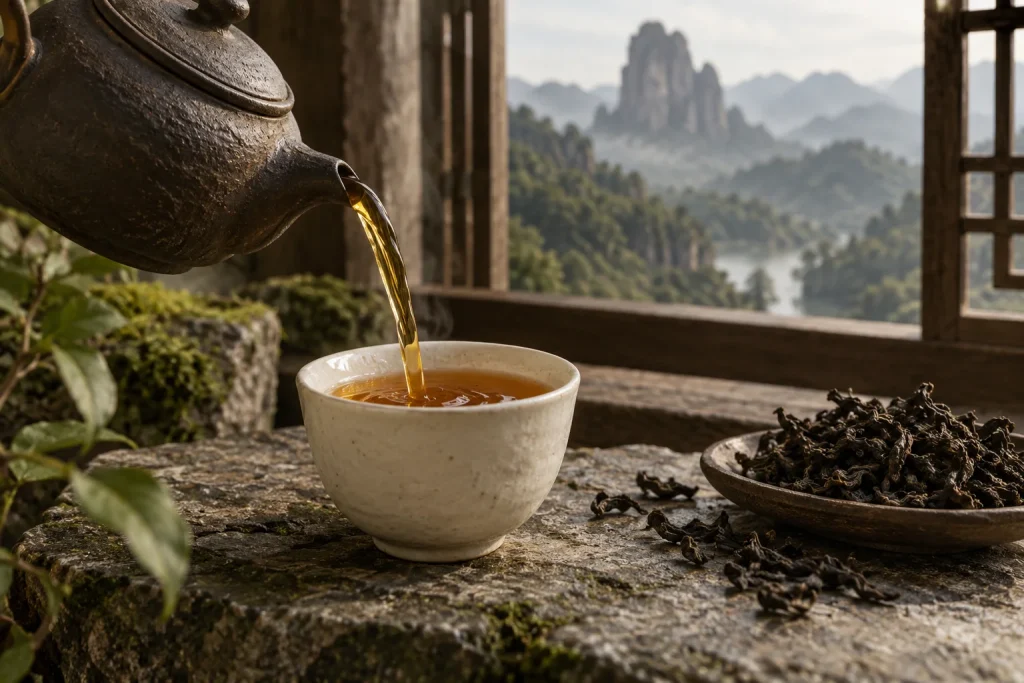
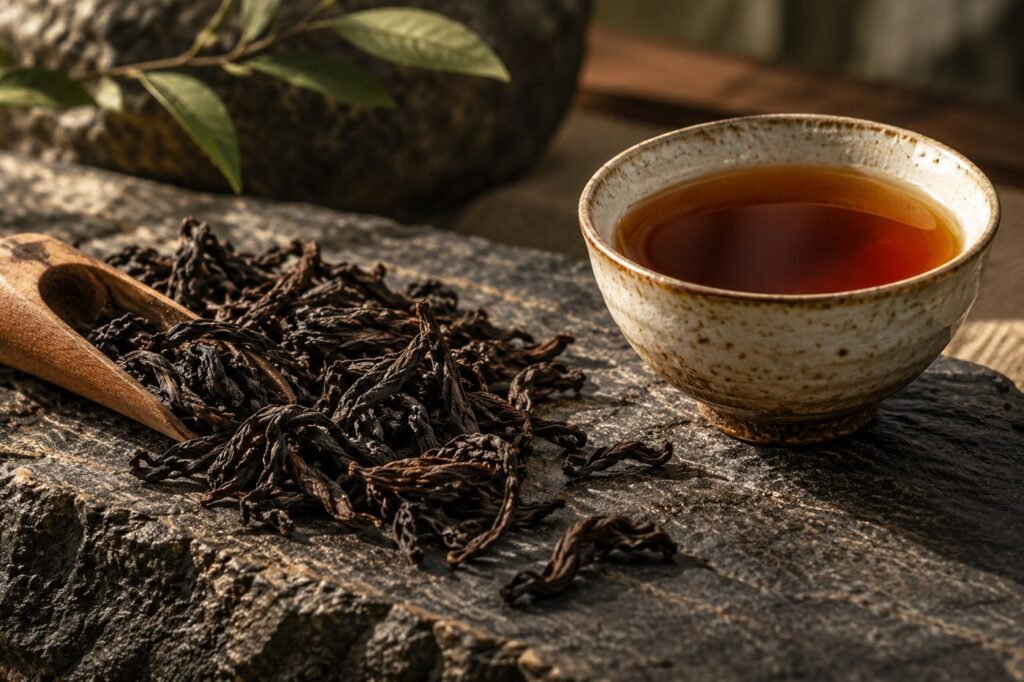
Da Hong Pao’s positive accounts describe a substantial, sweet, sometimes fruity or mineral cup. Critical feedback finds the roast too strong or the session less changing than hoped. Rou Gui can add a more explicitly spicy or cinnamon-like association, but several readers find those notes obscured by heavy roast. It would be misleading to promise that Da Hong Pao is always smooth and Rou Gui always spicy.
Choose the preparation you will repeat
Both cup recipes use five grams, yet Rou Gui’s listed time is longer. In gongfu, Da Hong Pao starts at eight grams and Rou Gui at nine, with different later timing. Try each exact method before drawing conclusions from strength. The guide to deciding when to stop resteeping explains why the eleven-pour Rou Gui schedule is not automatically better than seven pours for Da Hong Pao.