Da Xue Shan Raw Pu-erh review: floral sweetness with bitterness to manage
Da Xue Shan is a raw pu-erh candidate for someone interested in floral aroma, a sweet finish and short-infusion brewing. It is a less comfortable blind purchase if bitterness is a deal-breaker or you need an unambiguous harvest year before ordering.
We may earn a commission if you buy through our links. Affiliate disclosure.
At a Glance
KEY FEATURES
- Raw pu-erh
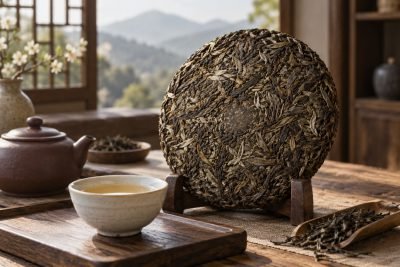
- Cake; seller lists 357 g for the full cake, sample offer separate
- 5 g / 355 mL / 95°C (203°F) / 3–5 minutes
Tea assessment
Research-based editorial assessment for the uses described below, not personal tasting or hands-on testing. Scores are qualitative judgments out of 5, separate from customer stars; historical feedback may cover other harvests or variants.
Floral, apricot-like and honeyed impressions distinguish it from the ripe options.
A sweet finish coexists with strong bitterness and astringency.
Gentle portioning and measured brewing are useful; the supplied batch needs confirmation.
Persistent sweetness is reported, but fading also limits a twelve-infusion promise.
PROS
- Floral and fruit-like impressions give the raw style a distinct appeal.
- A sweet lingering finish is supported by positive feedback.
CONS
- Bitterness and astringency may dominate for some drinkers.
- Current listing years conflict.
- A long infusion schedule does not guarantee sustained flavor.
Confirm the batch before buying for age
The listing summary gives a 2021 harvest and production date, while its body discusses 2018 material and an older title references 2016. We retain the tea’s identity without claiming those dates describe the same cake. Ask which batch the selected offer contains; historical feedback spans earlier purchases.
Sweetness does not erase the bitterness evidence
The original texts include floral, apricot-like and honeyed impressions, sometimes with a smooth finish. They also include astringency, strong bitterness and an outright rejection. This is a reason to begin with a sample and a measured recipe, not to promise that every bitter cup becomes sweet.
Separate leaf preparation from session expectations
One account connects broken leaf with stronger bitterness; another reports the session fading earlier than hoped. Neither establishes a universal rule, but both make gentle portioning and attention to the cup more useful than chasing a fixed infusion count.
Da Xue Shan: the 95°C raw-cake recipes
Cup & infuser
5 g / 355 mL / 95°C (203°F) / 3–5 minutes
Gongfu & gaiwan
8 g / 110 mL / 95°C (203°F); rinse listed without duration; infusions 15, 15, 20, 25, 30, 35, 40, 60, 80, 100, 150, 200 seconds
Source: the exact merchant listing. These are documented starting instructions, not our own tasting results. Keep the methods separate and decant leaf infusions fully.
Manage the portion without promising away bitterness
| Your situation | Useful next step |
|---|---|
| You are sensitive to bitterness | Start at the shorter documented time and keep leaf weight consistent. |
| The cake resists portioning | Use the confirmed seller breaking service rather than forcing a tool through it. |
For the related decision, use How to Separate a Pu-erh Cake for Brewing. Cool, dry, away from sunlight; keep ventilated. Check the merchant for the current selected-pack price.
Sources: reference 1.
Pros & Cons Analysis
Based on supplied customer reviews and verified product documentation
Pros
- The aroma descriptions point toward a different buying interest from the earthy ripe teas: a drinker seeking floral and fruit-like development has a specific reason to consider a sample.
- Positive finish descriptions include persistent sweetness, but these remain historical customer experiences rather than a current-batch tasting result.
Cons
- Strongly negative flavor feedback sits beside smooth-cup reports. It would be misleading to frame every negative result as a user error or to promise that shorter brewing resolves a taste mismatch.
- The date conflict prevents a reliable age-specific comparison. A buyer paying for a particular vintage needs seller confirmation before the article can support that decision.
- Reported fading limits claims about session length; twelve listed timings describe the method, not a measured return from every dose.
Sample Da Xue Shan before buying for age
Where Fengqing Da Xue Shan Raw Pu-erh Cake fits
Sample this tea for floral, sweet raw-pu-erh character if you are willing to manage bitterness through a careful routine.
Before a larger purchase
Confirm the supplied year before buying a full cake for its age.
The preference that rules it out
If a ready, earthy mug is the priority, the ripe options are a different and more directly relevant choice.
Frequently Asked Questions
Is this based on your own tasting?
No. It combines original historical customer feedback with merchant information. Current-batch experience and personal testing are not claimed.
Are the profile scores measured?
No. The bars are qualitative editorial judgments from documented features and customer feedback, not measured tasting results. Customer stars are separate merchant aggregates.
Tea details
| Tea style | Raw pu-erh |
|---|---|
| Leaf or powder format | Cake; seller lists 357 g for the full cake, sample offer separate |
| Seller-stated origin | Mengyou and Xueshan, Fengqing, Lincang, Yunnan, China |
| Harvest / identity status | Unresolved: summary April 10, 2021; body 2018; older title 2016 |
| Production date | Summary May 18, 2021; exact supplied batch needs confirmation |
| Cultivar | Fengqing large-leaf species |
| Cup or bowl starting method | 5 g / 355 mL / 95°C (203°F) / 3–5 minutes |
| Gongfu method | 8 g / 110 mL / 95°C (203°F); rinse listed without duration; infusions 15, 15, 20, 25, 30, 35, 40, 60, 80, 100, 150, 200 seconds |
| Storage | Cool, dry, away from sunlight; keep ventilated |
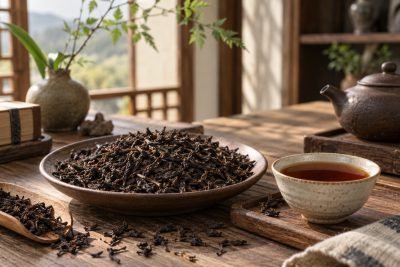
Ripened Aged Loose Pu-erh 2013
Mengyou Town, Fengqing County, Lincang, Yunnan, China · March–June 2013 (seller-stated)
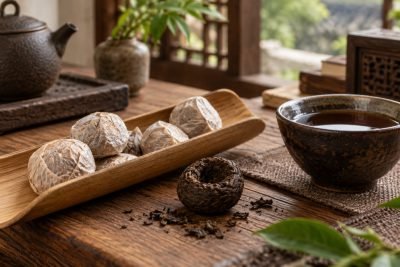
Ripened Aged Pu-erh Mini Tuocha
Simao (Pu’er), Yunnan, China · April 1, 2024 (seller-stated)