Organic Daily Matcha review: a versatile powder with a grassy edge
Daily Matcha is most persuasive as a flexible powder for milk drinks and simple breakfast mixtures. Some customer feedback also supports plain whisked drinking, but bitterness, seaweed-like flavor and uneven sweetness make a small first purchase sensible.
We may earn a commission if you buy through our links. Affiliate disclosure.
At a Glance
KEY FEATURES
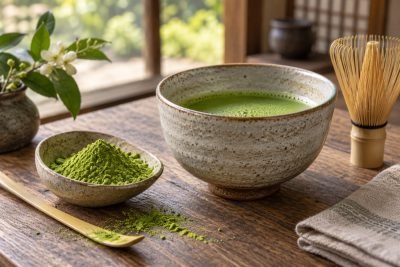
- Powdered green tea
- Fine powder
- 2 g / 60–70 mL / 60–80°C (140–176°F); whisk; no steep duration specified
Matcha assessment
Research-based editorial assessment for the uses described below, not personal tasting or hands-on testing. Scores are qualitative judgments out of 5, separate from customer stars; historical feedback may cover other harvests or variants.
Plain whisked drinking has support, but grassy bitterness and missing sweetness are important limits.
Lattes, yogurt, shakes and breakfast mixtures give the powder several documented uses.
Smooth drinks coexist with settling and residual particles; complete dissolution is not established.
The merchant supplies the dose, water quantity and temperature needed for a defined starting drink; the final mixing technique still needs adjustment.
PROS
- Useful for lattes and several simple food mixtures.
- Positive feedback includes smooth texture and attractive green color.
CONS
- Plain drinking can be bitter, grassy or seaweed-like.
- Powder can settle; whisking does not make it dissolved sugar.
- Origin prose conflicts with the summary.
Milk drinks have a clear place in the evidence
The full captured customer pages include warm and iced lattes, shakes, yogurt and breakfast mixtures. Those uses support versatility, but repeated contributions by the same customers are not independent votes and do not establish how frequently every outcome occurs.
Plain drinking is the more personal decision
Sweet, smooth and creamy impressions coexist with strong grassy or seaweed character, bitterness and a lack of the expected nutty sweetness. Some preparation experiments helped, while others did not. The review therefore does not promise that technique alone will turn this into the plain bowl you want.
Origin and freshness deserve attention
The summary names Wuyuan in Jiangxi, while the origin paragraph names Tianmu in Zhejiang. Both are in China; the page does not justify choosing one story without clarification. Customer feedback also mentions freshness loss, reinforcing the value of following the package’s storage instructions.
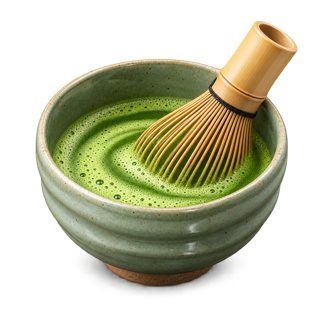
Daily Matcha: whisk a measured concentrate
Whisked water preparation
2 g / 60–70 mL / 60–80°C (140–176°F); whisk; no steep duration specified
Using the powder in food
Not applicable — powder is whisked, not a repeated leaf infusion
Source: the exact merchant listing. These are documented starting instructions, not our own tasting results. The powder is mixed into the drink or food; a loose-leaf rinse and decant schedule does not apply.
Adjust the drink, not several ingredients at once
| Your situation | Useful next step |
|---|---|
| Your latte has lumps | Whisk the measured powder with the documented water portion before adding milk. |
| The plain bowl is unpleasant | Try a smaller milk-drink portion rather than assuming more powder will improve it. |
| You use powder infrequently | Choose a manageable quantity and follow the airtight, opaque, refrigerated storage instruction. |
For the related decision, use Iced matcha latte: a measured starting recipe. Airtight, opaque packaging; refrigerate; seller lists 18 months. Check the merchant for the current selected-pack price.
Sources: reference 1.
Pros & Cons Analysis
Based on supplied customer reviews and verified product documentation
Pros
- Milk and breakfast applications recur in the original texts and give the buyer more than one realistic use for a pack. This is more useful than an unsupported claim that it is universally superior to coffee.
- Reports of smooth drinks and good color support trying the powder, but they are not a measured color or texture guarantee for a new harvest or a baked recipe.
Cons
- Negative plain-cup feedback persists across different preparation attempts. A buyer who needs a very sweet, delicate unsweetened bowl should not assume the Daily label settles that preference.
- Settling and residual particles appear in the accounts. Breaking up clumps and whisking can help distribution, but the article does not claim complete dissolution.
- The two origin locations need merchant clarification. Organic wording and certificate links do not independently resolve that inconsistency.
Daily Matcha for a varied drinking routine
Where Organic Daily Matcha Green Tea fits
Choose a modest pack for lattes, yogurt or a measured everyday bowl if grassy green-tea flavor appeals.
The preference that rules it out
Prefer a small comparison trial over a large purchase when plain-drinking sweetness is the main goal.
Before a larger purchase
This is a Chinese merchant listing with unresolved regional wording, not a verified Japanese-origin powder.
Frequently Asked Questions
Is this based on your own tasting?
No. It combines original historical customer feedback with merchant information. Current-batch experience and personal testing are not claimed.
Are the profile scores measured?
No. The bars are qualitative editorial judgments from documented features and customer feedback, not measured tasting results. Customer stars are separate merchant aggregates.
Tea details
| Tea style | Powdered green tea |
|---|---|
| Leaf or powder format | Fine powder |
| Seller-stated origin | Unresolved: summary Wuyuan, Jiangxi; origin prose Tianmu, Zhejiang, China |
| Harvest / identity status | May 30, 2026 (seller-stated) |
| Production date | Not specified |
| Cultivar | Wuyuan traditional tea species (summary) |
| Cup or bowl starting method | 2 g / 60–70 mL / 60–80°C (140–176°F); whisk; no steep duration specified |
| Gongfu method | Not applicable — powder is whisked, not a repeated leaf infusion |
| Storage | Airtight, opaque packaging; refrigerate; seller lists 18 months |
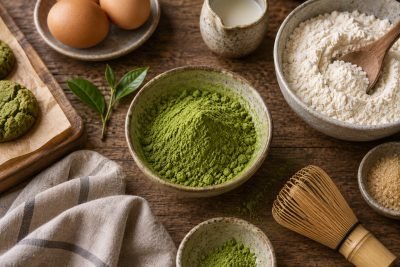
Organic Culinary Matcha Green Tea
Unresolved: summary Wuyuan, Jiangxi; origin prose Tianmu, Zhejiang, China · June 30, 2026 (seller-stated)