Organic Culinary Matcha review: a baking candidate, not a guaranteed plain-cup upgrade
Culinary Matcha is worth considering for cakes, biscuits and mixed drinks. Its customer evidence is less consistent for plain drinking: some enjoy it, while others find weak flavor, grassy bitterness or too much settling.
We may earn a commission if you buy through our links. Affiliate disclosure.
At a Glance
KEY FEATURES
- Powdered green tea
- Fine powder; formerly described as Organic Green Tea Powder
- Merchant Q&A: 2 g / 60–70 mL; temperature and mixing time not specified
Matcha assessment
Research-based editorial assessment for the uses described below, not personal tasting or hands-on testing. Scores are qualitative judgments out of 5, separate from customer stars; historical feedback may cover other harvests or variants.
Plain-cup experiences are mixed, including weak flavor and unpleasant grassiness.
Baking and milk-drink reports support a recipe role, not validation of our draft formulas.
Particle and settling complaints make distribution relevant; more powder may increase texture objections.
The merchant Q&A supplies dose and water, but not a complete temperature and mixing-time instruction.
PROS
- Original feedback supports several baking and milk-drink uses.
- Some accounts describe enjoyable flavor and color in mixed preparations.
CONS
- Plain-cup flavor and strength are inconsistent across accounts.
- Settling and powder distribution can be frustrating.
- Historical identity wording and regional origin need care.
The strongest use case is a recipe ingredient
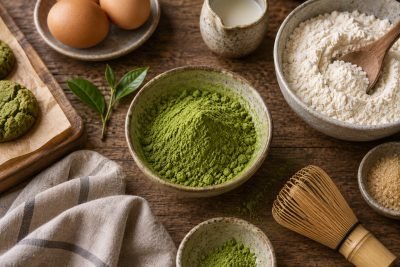
The original customer pages include cakes, biscuits, macarons and sponge cakes, along with lattes and smoothies. These are useful examples of application. They do not validate our cookie formula, prove heat stability or establish a controlled win over the Daily powder.
More powder is not a reliable fix
Feedback ranges from mild flavor to full-bodied grassiness; there are also complaints about weak smoothies and undispersed particles. Increasing the dose may bring more bitterness or texture along with flavor. A small measured trial is more useful than an unrecorded heaped spoon.
The historical name matters
Older customer texts refer to Organic Green Tea Powder, while the current listing uses Organic Culinary Matcha. The current summary and older prose also disagree on origin. We treat the feedback as listing history, not proof that every historical pack matches today’s processing or harvest.
Culinary Matcha: what the preparation evidence supplies
Whisked water preparation
Merchant Q&A: 2 g / 60–70 mL; temperature and mixing time not specified
Using the powder in food
Not applicable — recipe ingredient or whisked powder
Source: the exact merchant listing. These are documented starting instructions, not our own tasting results. The powder is mixed into the drink or food; a loose-leaf rinse and decant schedule does not apply.
Assess powder in the finished recipe
| Your situation | Useful next step |
|---|---|
| Tea flavor disappears in a recipe | Change one measured dose in a small trial before buying more. |
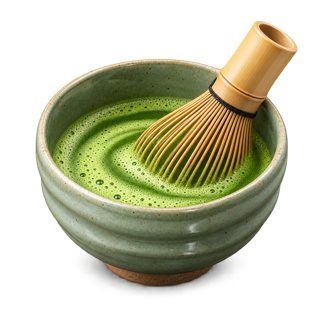
| Plain water is disappointing | Assess it in the intended recipe rather than judging it only as a ceremonial-style bowl. |
For the related decision, use Best matcha for baking: compare ingredients, pack sizes and recipe fit. Airtight, opaque packaging; refrigerate; seller lists 18 months. Check the merchant for the current selected-pack price.
Sources: reference 1.
Pros & Cons Analysis
Based on supplied customer reviews and verified product documentation
Pros
- Successful baking examples give this listing a credible reason to enter a small kitchen trial, especially when tea is one ingredient among flour, milk or other flavors.
- Positive milk-drink experiences support an additional use for the same pack, but do not establish that a specific latte ratio will suit every drinker.
Cons
- Both weak flavor and unpleasantly strong grassy impressions occur. The evidence cannot support a universal dose increase or a guarantee that this is more forceful than Daily.
- Particle complaints and the merchant’s historical reply about texture make thorough mixing relevant. They do not justify promising that the powder fully dissolves.
- Older wording and the origin conflict limit direct comparisons across years. Product-level certification and the supplied pack remain separate checks.
Culinary Matcha belongs in a small bake trial
Where Organic Culinary Matcha Green Tea fits
Choose Culinary as a candidate for a small baking or mixed-drink trial when its grassy profile sounds useful.
Before a larger purchase
Choose Daily as the alternative to assess for a wider everyday drinking routine, without assuming a proven head-to-head winner.
The preference that rules it out
Avoid a large order based only on the word culinary or an old price comparison.
Frequently Asked Questions
Is this based on your own tasting?
No. It combines original historical customer feedback with merchant information. Current-batch experience and personal testing are not claimed.
Are the profile scores measured?
No. The bars are qualitative editorial judgments from documented features and customer feedback, not measured tasting results. Customer stars are separate merchant aggregates.
Tea details
| Tea style | Powdered green tea |
|---|---|
| Leaf or powder format | Fine powder; formerly described as Organic Green Tea Powder |
| Seller-stated origin | Unresolved: summary Wuyuan, Jiangxi; origin prose Tianmu, Zhejiang, China |
| Harvest / identity status | June 30, 2026 (seller-stated) |
| Production date | Not specified |
| Cultivar | Wuyuan traditional tea species (summary) |
| Cup or bowl starting method | Merchant Q&A: 2 g / 60–70 mL; temperature and mixing time not specified |
| Gongfu method | Not applicable — recipe ingredient or whisked powder |
| Storage | Airtight, opaque packaging; refrigerate; seller lists 18 months |
Organic Daily Matcha Green Tea
Unresolved: summary Wuyuan, Jiangxi; origin prose Tianmu, Zhejiang, China · May 30, 2026 (seller-stated)