Wild Lapsang Souchong review: sweetness beyond the smoky stereotype
Wild Lapsang is the listing to explore if you associate Lapsang only with heavy smoke but would rather seek honey-like sweetness, cocoa and fruit.
We may earn a commission if you buy through our links. Affiliate disclosure.
At a Glance
KEY FEATURES
- Style: Wild Lapsang
- Seller-stated origin: Wuyi Mountain, Fujian Province, China
- Listed harvest: 2026-04-23
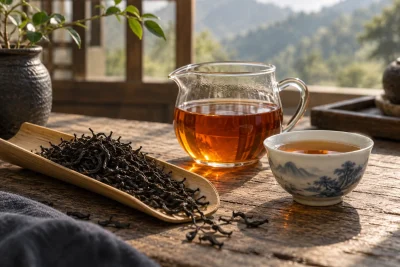
- Cup recipe: 3 g / 355 mL / 90°C / 194°F / 3–5 min
Tea assessment
Research-based editorial assessment for the uses described below, not personal tasting or hands-on testing. Scores are qualitative judgments out of 5, separate from customer stars; historical feedback may cover other harvests or variants.
Honey-like, cocoa and fruit impressions distinguish the buying interest from Smoky Lapsang.
Perceived sweetness can suit plain drinking, while weak or ordinary cups also occur.
The concentrated method begins with five-second steeps; longer attempts do not always add appeal.
A changing session is possible, but short-lived interest and batch differences remain in the feedback.
PROS
- Sweet fruit and cocoa impressions
- Can offer a layered plain cup
CONS
- May brew lighter than the description suggests
- Harvest and palate can change the impression
Its merchant description distinguishes it from the smoked version. The customer record supports that sweeter direction, while also including muted cups and inconsistent impressions of smoke.
Read the exact listing, not just Lapsang
The merchant describes a different preparation from the pine-smoked tea. Positive feedback emphasizes chocolate, honey, malt and fruit, often specifically noting the absence of a smoky taste. A few contrasting descriptions do mention smoke, so the useful distinction is the documented listing identity rather than a promise about every palate.
A short session can be enough
The first gongfu steeps are only five seconds at a concentrated ratio. That can suit a deliberate session, but the evidence also includes weak results even after longer attempts. If the cup remains uninteresting to you, an elaborate brewing routine does not create an obligation to keep buying it.
Wild Lapsang: brewing the sweeter listing
Cup & infuser
3 g / 355 mL / 90°C / 194°F / 3–5 min. Begin at the lower end of the stated time range, then separate the leaves from the drink. Taste before changing one setting in the next cup.
Gongfu & gaiwan
5 g / 110 mL / 90°C / 194°F. Rinse: around 5 seconds. Drinking infusions: 5 → 5 → 10 → 15 → 30 seconds. Pour off each infusion before the next.
Source: the exact merchant brewing instructions, checked October 3, 2026. These are starting recipes, not in-house test results.
Judge the current cup beyond the Lapsang name
| What matters to you | What to try or consider |
|---|---|
| You want a no-smoke alternative | Check that the selected listing is Wild Lapsang, not Smoky Lapsang. Treat individual flavor impressions as guidance rather than an absolute absence test. |
| The first five-second steep seems weak | Keep the documented concentrated ratio and move through the sequence before changing several parameters. Stop if it remains unappealing rather than chasing a named flavor indefinitely. |
For a wider preparation or selection decision, use how to brew chinese black tea: cup and gongfu. The recipe here remains the starting point for this exact tea.
For storage, the merchant specifies: Store in airtight, opaque packaging; in cool, dry place.
Review basis: selected original customer feedback across harvests, combined with merchant documentation; no personal tasting or customer-consensus calculation.
Pros & Cons Analysis
Based on supplied customer reviews and verified product documentation
Pros
- A route into a different kind of Lapsang. The read set supports choosing this tea for honey-like, malty and chocolate-like character rather than the pine-smoke experience. That makes it useful for a reader who dismissed the whole name after trying a smoked tea.
- Sweetness without requiring an addition. Positive feedback describes enough changing flavor to enjoy without sugar. The appeal is the tea’s perceived sweetness and aroma, not a verified nutritional or ingredient claim.
Cons
- Aromatic notes are not guaranteed intensity. Contrary feedback includes weak aroma, ordinary flavor and a short useful session despite attempts to adjust. Sample it before assuming the listed honey or longan impressions will be clear to you.
- Avoid buying on a remembered batch alone. The evidence includes a less satisfying later purchase and disagreement over smokiness. Those are reasons to reassess the current pack, not proof that quality has declined in a measurable way.
Wild Lapsang offers another flavor direction
Where Lapsang Souchong Wild Black Tea fits
Try Wild Lapsang for a sweet, cocoa-and-fruit direction in Chinese black tea.
Before a larger purchase
It is especially relevant if pine smoke is what kept you away from the style.
Before a larger purchase
It still needs a small-pack trial: the evidence includes cups that do not deliver the expected depth.
Frequently Asked Questions
What is the cup recipe for this tea?
3 g / 355 mL / 90°C / 194°F / 3–5 min. Use the current pack instructions if its identity differs.
Is this based on your own tasting?
No. It synthesizes original customer feedback and merchant documentation. The assessment bars are research-based suitability judgments, not personal tasting results.
How should I store it?
Store in airtight, opaque packaging; in cool, dry place. Follow the instructions supplied with your exact pack.
Tea details
| Tea style | Wild Lapsang |
|---|---|
| Seller-stated origin | Wuyi Mountain, Fujian Province, China |
| Cultivar | Wild Caicha |
| Harvest date | 2026-04-23 |
| Cup method: leaf | 3 g |
| Cup method: water | 355 mL |
| Cup method: temperature | 90°C / 194°F |
| Cup method: time | 3–5 min |
| Gongfu method: leaf | 5 g |
| Gongfu method: water | 110 mL |
| Gongfu method: temperature | 90°C / 194°F |
| Gongfu infusion sequence | 5, 5, 10, 15, 30 s; rinse: around 5 seconds |
| Seller storage instructions | Store in airtight, opaque packaging; in cool, dry place |
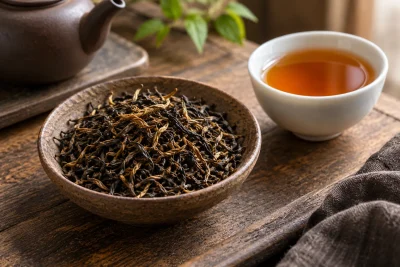
Premium Golden Monkey Black Tea
Fuding City, Fujian Province · 2026-05-18
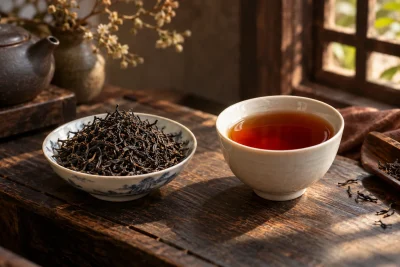
Premium Keemun Hao Ya Black Tea
Qimen County, Huangshan City, Anhui Province · 2026-06-16
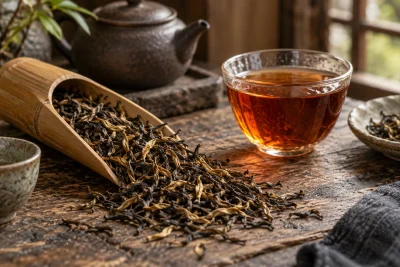
Yun Nan Dian Hong Black Tea Golden Tip
Lida Village, Desili, Mengyou Town, Fengqing County, Lincang City, Yunnan Province · 2026-04-08
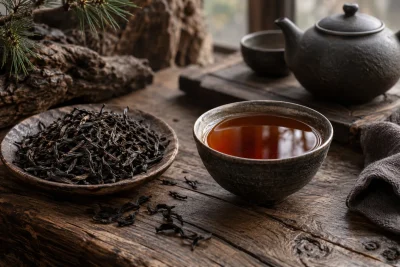
Lapsang Souchong Smoky Black Tea
Tong Mu Guan (桐木关), Wuyi Mountain, Fujian Province · 2025-04-30